
Kihei Resident Lookup Sources
No agency keeps an all-purpose list of people who live in Kihei. Each official system records one relationship. Maui County links parcels to owners and mailing fields. Hawaii courts identify parties to cases. State health records document vital events under strict access rules. Election records follow their own confidentiality law. A sound person search selects the source that fits the question, then states what the result does and does not prove.
| Record | What It Confirms | Official Source | Access Route |
|---|---|---|---|
| Parcel assessment | Owner name, mailing field, TMK, and assessment link | Maui Real Property Assessment | qPublic, county office, or historical books |
| Recorded instrument | A named party's role in a deed or other filing | Bureau of Conveyances | Online account, research room, or written search |
| Court case | Case identity, party role, status, events, and public documents | eCourt Kokua | Online, Hoapili Hale terminal, mail, fax, or phone |
| Vital event | A birth, death, marriage, or civil-union record for an eligible requester | Hawaii Vital Records | Online order, mail, state office, or genealogy route |
| License or entity | Official professional status or a business filing relationship | DCCA license search | Free online search or written verification |
Start with the row that matches the known relationship. A parcel result is strong evidence of ownership, but not of occupancy. A deed party may be a trustee, former owner, lender, or estate representative. A court hit proves only that the name appears in a case until the Case ID, date, court, and party role line up. These distinctions keep Kihei verification focused on evidence instead of assumptions.
Search Kihei Court Parties
Hawaii Judiciary's eCourt Kokua is the main public court search for a known person. Its Party Search offers Name, Person, Company Name, and Party ID routes. For a person, last and first names are required. Middle name, phonetic matching, partial matching, filing-date bounds, and case type can narrow the result. A broad common-name query may return up to 200 results, so adding a Maui date range or known case type can cut noise without forcing a match.
| Search field | How to use it |
|---|---|
| Last and first | Required for Person Search; retain the spelling used in the source clue. |
| Middle | Optional, but useful when two Kihei names are alike. |
| Phonetic or partial | Try after an exact query, and record which option produced the hit. |
| Filing dates | Optional beginning and ending dates use DD-MON-YYYY. |
| Case type | Limits a search when the kind of proceeding is already known. |
A case summary can show Case ID, type, status, last update, filing date, court, and location. The case view may add parties and aliases, dockets, offenses, hearings, and events. Sealed, juvenile, protected-address, and other confidential material stays masked. The Judiciary warns that a name match alone does not confirm identity.
The eCourt Kokua search screen shows the public entry point used for this Kihei check.
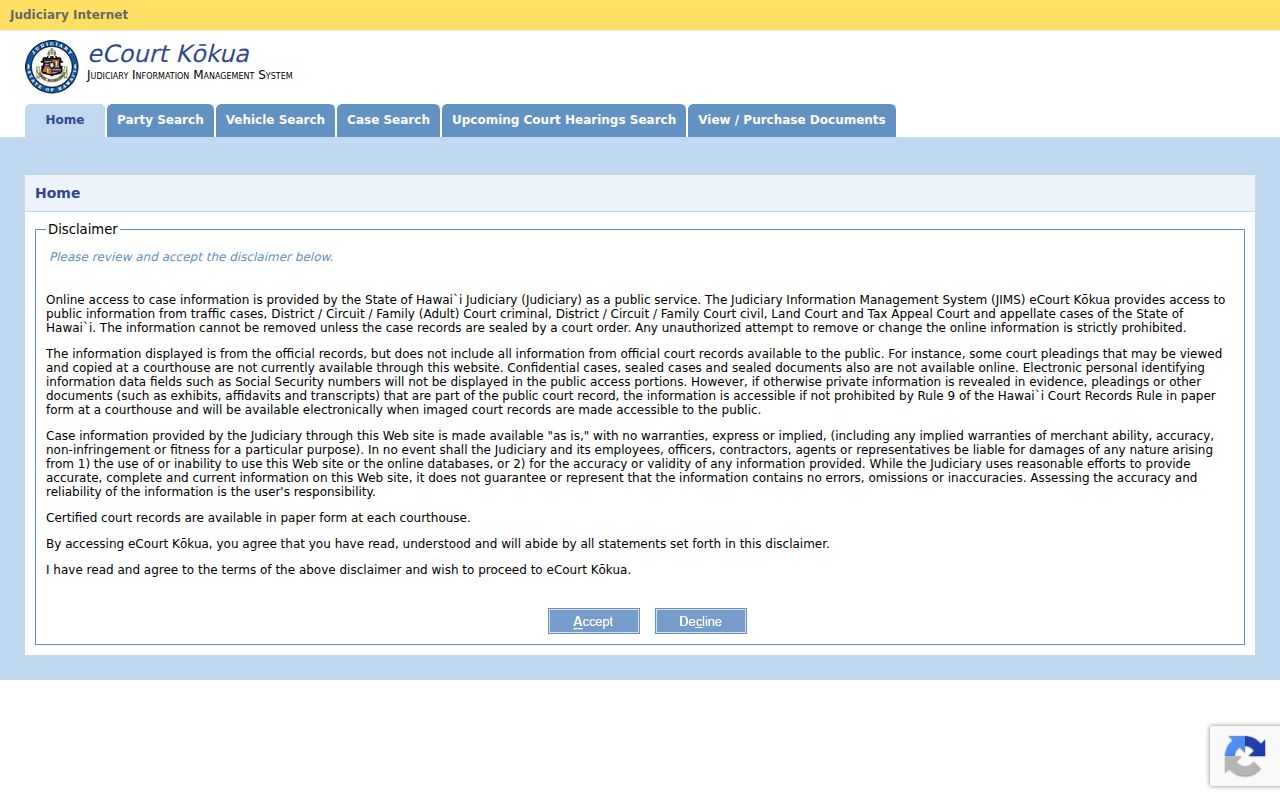
The screen is a case index, not a roll of current Kihei residents, so each result still needs its own identity check.
Verify One Kihei Record Match
Verification means carrying a stable identifier from one official source to the next. Preserve the original name, including a middle initial, suffix, alias, married name, and the `Kīhei` spelling when a historical source uses it. Record the source date as well as the event date. Then compare at least two independent details before deciding that two entries refer to one person.
- Write down the exact name, known date range, and the relationship being tested. Do not start with a sweep of unrelated databases.
- Anchor the query to a strong key. Use a Case ID for court material, a TMK for a parcel, a document number for a recorded instrument, or a license number for a credential.
- Compare the role and place. A court party, parcel owner, deed grantee, and historical subscriber are different kinds of matches.
- Check a second official source only when it can confirm the same fact. Keep any conflict visible rather than merging records.
- Obtain a certified copy from the custodian when an official copy is needed. A search-screen entry is only an index.
- Docket
- The dated list of filings and events in a court case.
- Index versus image
- An index points to a record; the image is the underlying document and may carry a fee or access limit.
- Certified copy
- A copy authenticated by the office that keeps the record.
- TMK
- Hawaii's tax map key, the stable parcel identifier used across county and land-record systems.
Kihei Court Records Offline
Some Maui court files cannot be reached through the current online window. The Judiciary manual says older District civil files before October 7, 2019, Circuit civil files before October 28, 2019, Land and Tax files before November 18, 2019, and Family civil files before April 25, 2022 are outside public online coverage. That absence is a cue to change channels, not proof that no case exists.
Hoapili Hale at 2145 Main Street in Wailuku houses Second Circuit access. Public terminal review is free, while copies are charged. The Legal Documents branch is available at 808-244-2969, and older records more than five years old should be discussed with that branch. The Maui request form can be sent by mail or fax. A mailed response may take at least 15 to 20 business days, and a $5 name-search charge may apply when no case number is supplied. The office invoices first, so money should not accompany the initial request.
Note: Court public-access rules govern Judiciary files; a UIPA request is not a substitute for the court's own search and copy process.
Confirm Kihei Vital Events
Hawaii vital records require a direct and tangible interest under HRS §338-18. The registrant, spouse, parent, descendant, common ancestor, guardian, authorized agent, estate representative, and certain other statutory parties may qualify. A public index entry is not an open certificate. For a family or estate question, document the relationship before ordering and use the Department of Health form that matches the event.
Eligible birth, marriage, and civil-union orders can use the state portal with government ID and card payment. Current forms may also be mailed to the Honolulu Vital Records office. The listed schedule is $10 for the first certificate, $4 for each added copy, and a $2.50 online fee for up to five copies. Maui pickup is not listed. Since February 1, 2026, divorce records are obtained from the Judiciary rather than DOH.
Older family research follows another route. HRS §338-18 permits genealogy access for events more than 115 years before the current year, subject to the records and procedures actually available. Hawaii State Archives indexes, library microfilm, the Kahului Family History Center, and DOH genealogy guidance can supply a dated lead. A negative old index result is not conclusive because the research notes under-reporting and incomplete historical series.
Kihei Voter Lookup Boundaries
Hawaii does not offer an unrestricted public name-to-home-address voter lookup. The Online Voter Registration system serves registration and updates, while Maui County handles local voter information through the Office of the County Clerk. HRS §11-97 and election rules distinguish public registration facts from confidential affidavit fields. That makes voter material a controlled election record, not a shortcut for finding a private address.
The Maui voter-data affidavit requires a specific election or government purpose, sworn certifications, applicant and organization details, and a choice of delivery route. It prohibits commercial release or distribution. The linked form carries an older stated fee and format, so confirm both with County Clerk Elections at 808-270-7749 before payment. A resident lookup should never turn that purpose-bound route into a casual directory.
The Hawaii online voter registration portal is the official web channel for a voter to register or update their own record.
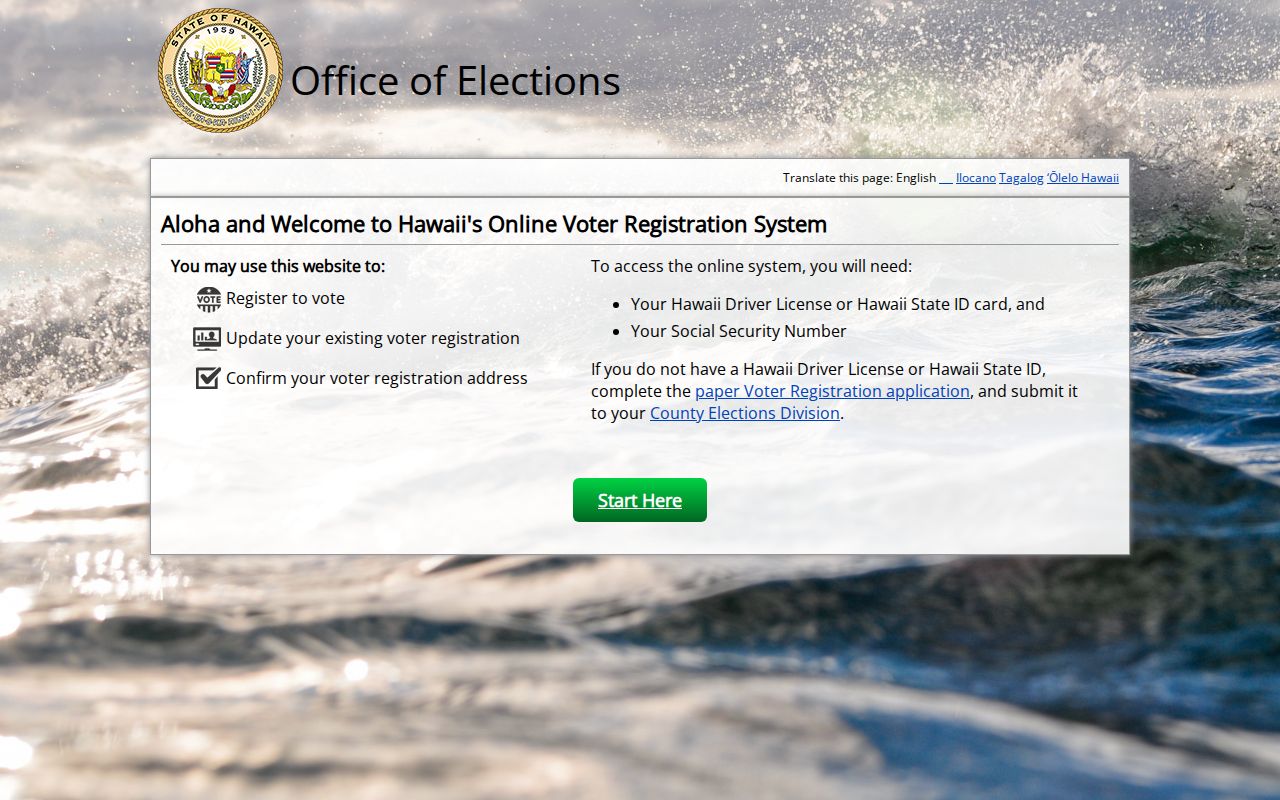
Its role is registration service, not public disclosure of who lives at a Kihei address.
Check Kihei Public Credentials
A person may appear in an official professional or business record without that record proving residence. Hawaii DCCA's Professional and Vocational Licensing search can report an original issue date, expiration, status, and disciplinary information. The online lookup is free. Written verification is listed at $15 with a 20-business-day processing period. Match the license number and board before relying on the name.
Business Registration Division records connect people to entities, trade names, and filing roles. DCCA moved services to a new Hawaii Business Express system on July 6, 2026, and warned of transition delays. Because the live search fields were not captured during research, use the stable BREG page to reach the current portal. An entity number, filing date, and named role are sound checks. An office or registered-agent address is not a Kihei home address.
Unclaimed Property is another name-based official source for an owner, heir, or business claim. A matching name starts a proof process; it does not reveal where someone now lives. This is useful when the goal is an estate or heir matter, provided the claim documents and state instructions support the match.
Protect Kihei Address Privacy
Public access varies by record. Home phones, dates of birth, Social Security numbers, protected court addresses, confidential voter-affidavit fields, and restricted certificate details do not become fair game because a name appears elsewhere. Keep parcel situs, owner mailing address, historical address, and current contact information in separate fields. If an official source offers correction, sealing, or restricted-access procedures, use that custodian's route.
Hawaii's Address Confidentiality Program gives qualifying survivors of domestic abuse, sexual offenses, or stalking a substitute address for agency use, mail forwarding, and service of process. Enrollment is handled through a certified application assistant or victim-service provider. A Kihei resident lookup must not try to connect that substitute address to a protected physical location. Program questions go to the Department of Law Enforcement at 808-587-5054.
Lawful personal use. Use Kihei records for legitimate personal research. Never use a result to stalk, harass, intimidate, impersonate, or expose protected data.
Request Missing Kihei Records
When a county record is not online, ask the agency that actually keeps it. Hawaii's Uniform Information Practices Act, HRS chapter 92F, applies to existing government records subject to privacy and other exceptions. Describe the record, date range, office, and preferred inspection or copy format. A requester generally need not explain why the record is wanted. Maui's GovQA portal covers participating county agencies, but RPA, courts, state health, elections, and the Bureau of Conveyances may use their own direct forms.
The Office of Information Practices says assistance is available when an agency has not responded or has not completed its response after 10 business days. Current guidance generally waives the first $30 of search, review, and segregation time. Search is $2.50 per 15 minutes, review and segregation is $5 per 15 minutes, and copies and postage are actual costs. An agency need not create a new list of Kihei residents when no such record exists.
A careful resident lookup ends with a research note: exact source, access date, record date, identifier, field meaning, corroborating source, and unresolved limit. That note makes later correction possible and prevents an old or partial result from turning into a claim the custodian never made.