
Kihei Previous-Resident Sources by Era
The trail for previous residents of a Kihei address crosses records made for different purposes. Maui County Real Property Assessment identifies a parcel and maintains historical field and ownership books. The state Bureau of Conveyances records deeds and other instruments. Directories give dated name or telephone associations. Census, probate, vital, cemetery, church, and family material add household context.
| Source | Years it covers | Where held | What it can show |
|---|---|---|---|
| BOC recorded instruments | Online from January 1, 1976; older records through request or research room | Hawaii Bureau of Conveyances | Parties, instrument, date, TMK, book/page or document number |
| RPA field and ownership-history books | Through 1987 | Maui County public documents and RPA | Older assessment and parcel context |
| Polk island directories | 1954-1987 | UH Hawaiian Collection microfiche D70144 | Dated surname, business, telephone, or locality clues |
| Wailuku telephone pages | 1958-1963 | Library of Congress | Historical Kihei locality references |
| Territorial census | 1866, 1878, 1890, 1896, with gaps | Hawaii State Archives | Named household facts in uneven Maui districts |
| Maui vital indexes | 1842-1929 | Hawaii State Archives | Indexed births, marriages, and deaths, with under-reporting |
Choose the source by period. Recent property research starts with the parcel and recorded document. Mid-century work gains from island and telephone directories. Earlier searches depend on districts, land links, archives, and family records because the modern Kihei street grid may not appear.
Anchor Kihei Records to a TMK
A street address can change, while the tax map key, or TMK, is the stable county parcel key. Maui's ownership-data description orders it by island, zone, section, plat, parcel, and condominium property regime when present. Use qPublic or the county route to identify the current TMK, owner type, situs information, and mailing fields. The mailing address may be elsewhere, and an owner may be a trustee, entity, lessee, or estate representative. None of those fields proves occupancy.
The county public-documents index adds field and parcel books, ownership-history books, permits, plans, map-history folders, and planning records. Search with the TMK when an old street form produces no result. Some large PDFs may take time to generate. If an item is not open online, call the RPA tax-map and ownership line at 808-270-7226, use the Kahului office, or ask the holding county department about its request route.
Source ladder. Directory clue to RPA history book to BOC instrument to map or plat to probate and family collections.
Walk Kihei Deeds Backward
The Bureau of Conveyances online service is the statewide land-record route. Account creation is required, searching is free, and images remain blurred or watermarked until purchase. The index accepts grantor or grantee names, person or entity choices, exact and SoundEx variants, recording dates, document group or name, document number, related document number, certificate, book and page, TMK, and other instrument keys.
- Pull the current TMK, legal description, and owner label from the county parcel route, with the access date.
- Find the current owner's purchase instrument by grantee name, TMK, and approximate recording date.
- Read the grantor, instrument type, recording date, document number, and related-document links.
- Search that seller as a grantee to locate an earlier acquisition, then repeat the sequence.
- For pre-1976 material, use the BOC written-search form or Honolulu public research room and state the exact date range.
- Grantor and grantee
- The party transferring an interest and the party receiving it. Roles depend on the instrument.
- Chain of title
- A sequence of recorded interests tied to the same parcel, checked instrument by instrument.
- Legal description
- The land description within a document. It can be more stable than a modern street address.
Document numbering itself gives date clues: older regular records use liber and page, 1990-2011 uses year plus number, later systems use eight or ten digits, and Land Court records carry a T prefix. A deed records an interest, not the people who slept at the property.
Kihei Deed Requests Off the Web
The BOC written-search form asks for requester contact details, recordation period, certified-copy choice, delivery method, document class, names, approximate date, island, location, property address, and TMK. Published instructions distinguish fee eras and can appear to use different date thresholds. Quote the desired span and ask BOC which current fee rule applies before sending payment.
The public research room is Room 123 in the Kalanimoku Building, 1151 Punchbowl Street, Honolulu. The BOC phone is 808-587-0147, and mail goes to P.O. Box 2867, Honolulu, HI 96803. This fallback is essential for older Kihei property interests because the online collection begins in 1976. The FamilySearch Hawaii Grantor and Grantee Index for 1845-1916 can provide a historical lead, but verify it against the Bureau and the recorded instrument.
Pair Kihei Directories With Census
Owners are only one layer of a property's past. A city directory or telephone page may name a subscriber, business, head of household, or locality. Census schedules and family records can add other household members, but Maui geography is uneven in the territorial runs. The 1866 material is mainly Lahaina district; 1878 includes named Maui schedules; 1890 includes parts of Hana and Lahaina. Some records have no broad name index.
- Search the known surname in two directory years, using both Kihei and Kīhei.
- Record the edition, page, entry type, exact locality, and any abbreviation.
- Choose the closest census year and search the documented district as well as the family name.
- Compare age, birthplace, family structure, work, land, and other fields without forcing a match.
- Use an obituary, probate file, church record, or vital index to test the relationship.
The historical shelf and publisher runs are detailed on the Kihei city directories page. Exact reverse-address or criss-cross holdings have not been confirmed for the Kihei branch, so ask a librarian for the title and year instead of promising address-order coverage.
Kihei Archive Gaps Need Context
The State Archives directory holdings include selected Polk and Husted scans and links to cataloged volumes.
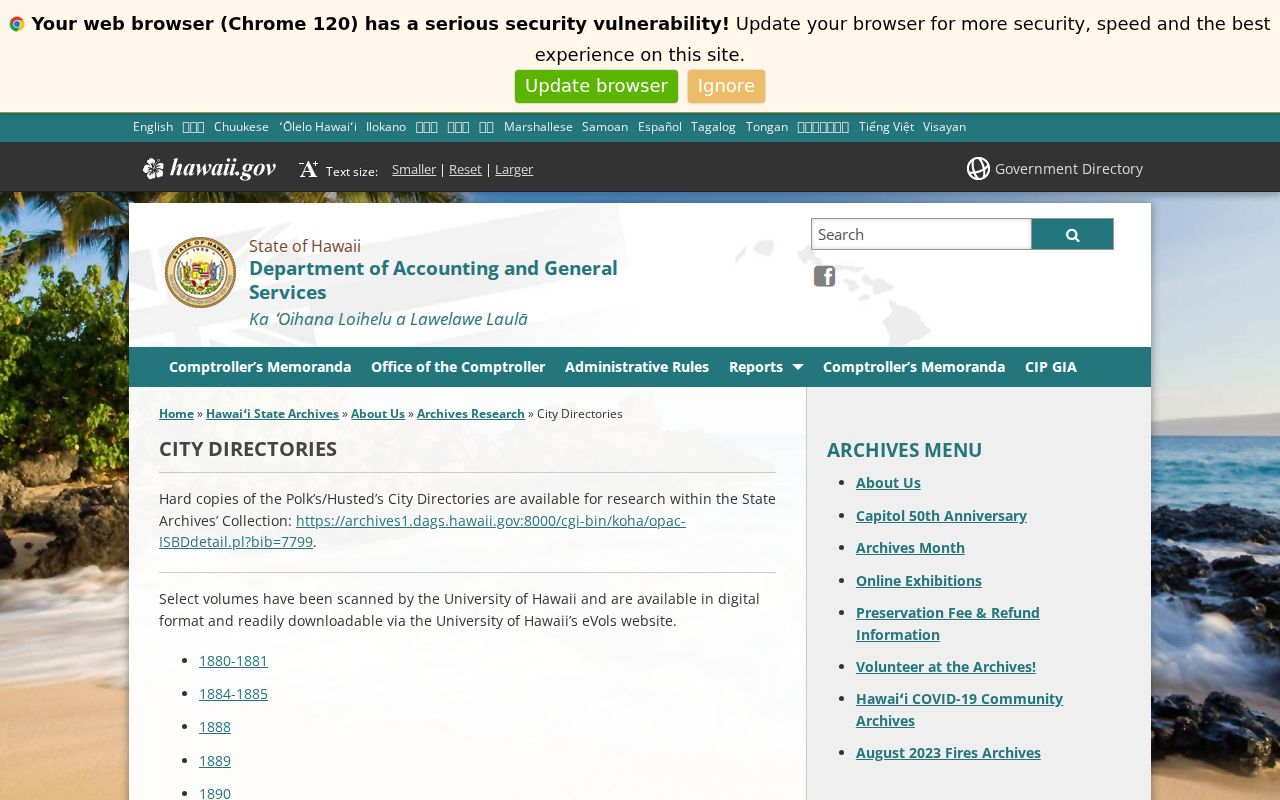
The image points to a statewide shelf, not a promise that every book contains a Kihei section. Read the volume title, edition, locality heading, and page image. The 1958-1963 Wailuku scan is a useful bridge because it contains a historical Kihei locality reference. It should be cited as a dated directory clue, never as a current-address claim.
County planning history explains some blank searches. Kihei-Makena had scattered uses, grazing, and truck farms in the 1950s. Urban designation came in 1967, zoning mapping in 1969, and a civic plan in 1970. A current street number may not map neatly to a mid-century listing. Search a district, parcel, route, land name, or nearby locality only when a historic map or record supports the translation.
Check Kihei Vital and Probate Clues
The Hawaii State Archives vital-statistics guide describes historical indexes for 1832-1910 and 1911-1929, with Maui coverage from 1842-1929.
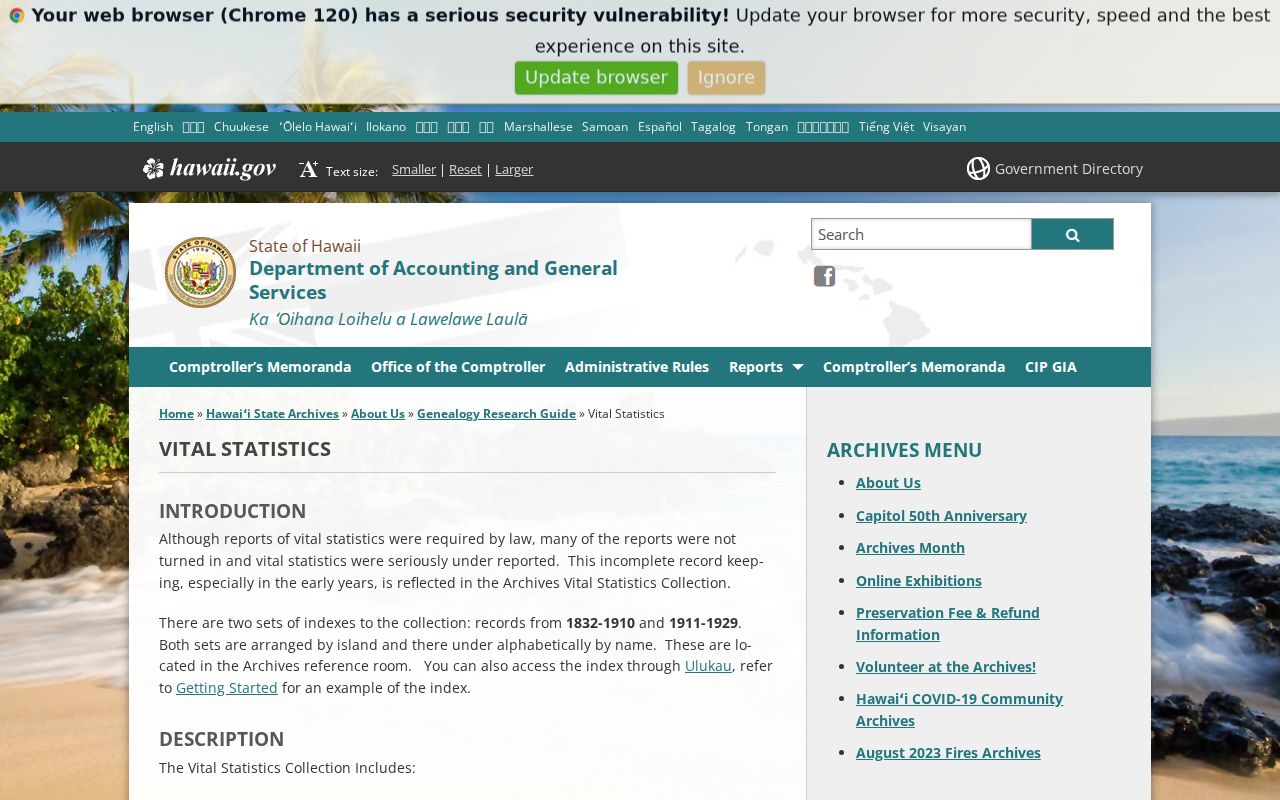
The guide warns about under-reporting, and marriage records before 1896 lack parents. A negative index result does not prove the event never happened. Probate can identify a death place, possessions, heirs, executor, inventory, accounts, and final settlement. Yet an heir named in a Kihei-related estate may have lived elsewhere. Keep relationship evidence separate from address evidence.
Obituary notices in the Archives guide span 1836-1950 but lean toward Honolulu English-language papers. Cemetery subseries cover 1878-1992, while no official Kihei-only online interment list was found. Use these sources with probate, church, newspaper, and family materials. Each should confirm one part of the timeline.
Maui Archives for Past Residents
The Maui Historical Society research service offers appointment-based access to photographs, documents, local history, and family or community collections at Hale Hōʻikeʻike in Wailuku.
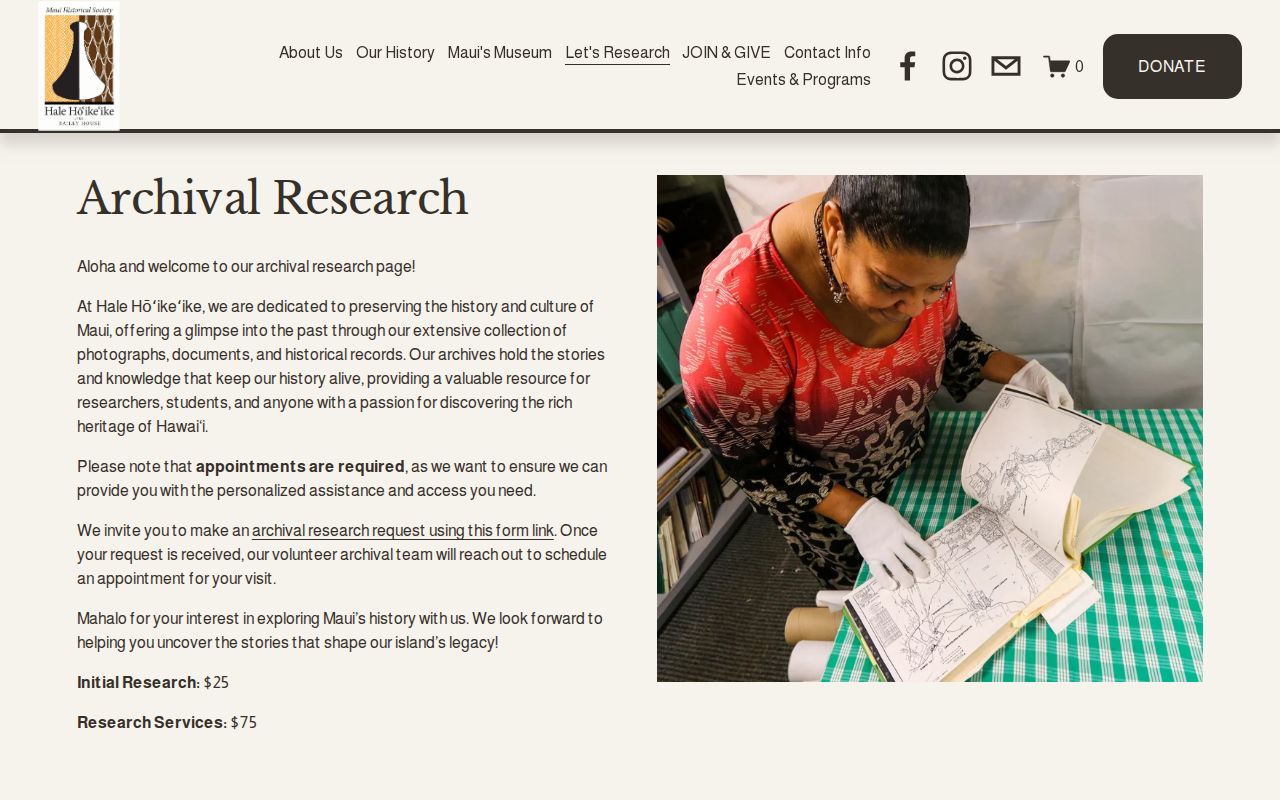
The Society's finding aids name land records, ledgers, labor papers, church and organization files, family histories, maps, plats, photographs, and a historic county jail record book. Contact 808-244-3326 or info@mauihistoricalsociety.org with a narrow question. Published fees should be checked before ordering research.
Kihei Public Library adds the local catalog, Ask a Librarian, Ancestry Library Edition, and HeritageQuest routes. The State Archives research room and archivist remain the fallback when Digital Archives shows only an index. Together, in-person, phone, email, catalog, scan, microfiche, and written-request channels cover records that no single portal can deliver.
Use Kihei Previous-Resident Clues Lawfully
A former-resident timeline should contain the source, query, record or event date, access date, identifier, place wording, relationship shown, and what remains unknown. This guards against turning a parcel owner into an occupant or a directory subscriber into a complete household. It also makes later corrections possible when a portal changes or an archivist supplies the underlying image.
Hawaii's Address Confidentiality Program provides substitute addresses to protect eligible people. Do not try to defeat that protection by joining parcel, directory, court, voter, or other records. Historical and house research should remain tied to family history, estate work, preservation, or personal curiosity.
Lawful use. Never use previous-resident records to track, threaten, harass, or expose a living person.
Property Watch is a useful fraud-awareness tool, not proof of identity or title. It sends alerts when a matching name appears in a new recorded document and warns about false positives. Verify any alert with the document number, date, TMK, instrument, and official image before associating it with a Kihei parcel or person.