
Kihei Directory Collections by Era
Kihei city directory research begins with collections whose reach is wider than modern Kihei. The Hawaii State Archives directory catalog lists Polk and Husted volumes, while a University of Hawaii bibliography identifies the strongest sustained Maui run. Read each title page and coverage statement. A statewide or island directory may place Kihei under Maui, Wailuku, a rural route, a business heading, or a short locality note.
| Collection | Documented years | Where held | Access |
|---|---|---|---|
| Polk and Husted Hawaii directories | Selected scans, 1880-81 through 1924 | Hawaii State Archives | Online scans, catalog, research room |
| Husted and Polk-Husted series | 1900-01 through 1941-42 | UH bibliography and Hawaii collections | Catalog and library access |
| Polk island directory | 1954-1987 | UH Hawaiian Collection, microfiche D70144 | Microfiche and reference help |
| Wailuku White and Yellow Pages | 1958-1963 | Library of Congress | Free digitized pages |
| Family and place collections | Varies | Maui Historical Society | Finding aids and appointment |
No official source confirms a complete Kihei-only run or a current open reverse telephone directory. Exact reverse-address sections and local microfiche holdings remain questions for library staff. Request a known year and title instead of assuming every edition has street-order pages.
Kihei Directory Without City Hall
Kihei is a census-designated place administered by Maui County, not an incorporated city. It has no separate municipal clerk or resident register. The Maui County Clerk routes election questions and points land, court, and vital-record inquiries to the correct state or county custodian. The county staff directory identifies departments, but it is not a directory of Kihei residents.
This split explains why an old name search can involve Honolulu, Wailuku, Kahului, and Kihei. The Bureau of Conveyances keeps statewide land instruments. Maui County keeps parcel and planning files. The Hawaii State Archives preserves government and genealogy series. Local help comes from the Kihei Public Library and Maui Historical Society. Start with the record relationship, not a presumed city office.
Useful distinction. A civic directory names offices and groups; a historical city directory gives dated person, business, telephone, or address associations.
Reading a Kihei Directory Entry
Old pages compress facts into short lines. The exact marks vary by publisher and year, so inspect the abbreviation key before interpreting initials. In the 1958-1963 Wailuku telephone run, the research found a Kihei locality reference that uses a short residence marker. The line proves that the printed edition associated that listing with Kihei at that time. It does not prove present residence or identify every person in the household.
| Name | A subscriber, person, organization, or business as printed in that edition. |
|---|---|
| Locality or address | A street, route, town, or short residence descriptor, sometimes without a modern number. |
| Telephone | The listed line for that edition, not a durable identity key. |
| Business heading | A trade or firm category that may differ from a home listing. |
| Edition and page | The date and image location needed to cite and check the entry. |
- Criss-cross directory
- A directory arranged by street or telephone number instead of only by name. Kihei coverage is not confirmed for every run.
- Householder index
- A list keyed to a household head or address, not necessarily every occupant.
- Abbreviation key
- The publisher's legend for shortened terms. Save it with the entry so a mark is not guessed.
Kihei Library Directory Help
The Kihei Public Library is the local place to ask about a precise surname, directory title, year, newspaper, or microfilm lead. The branch is at 35 Waimahaihai Street and can be reached at 808-875-6833. Its published genealogy resources include Ancestry Library Edition on library premises or Wi-Fi, HeritageQuest for cardholders from home, the catalog, Ulukau, programs, and Ask a Librarian.
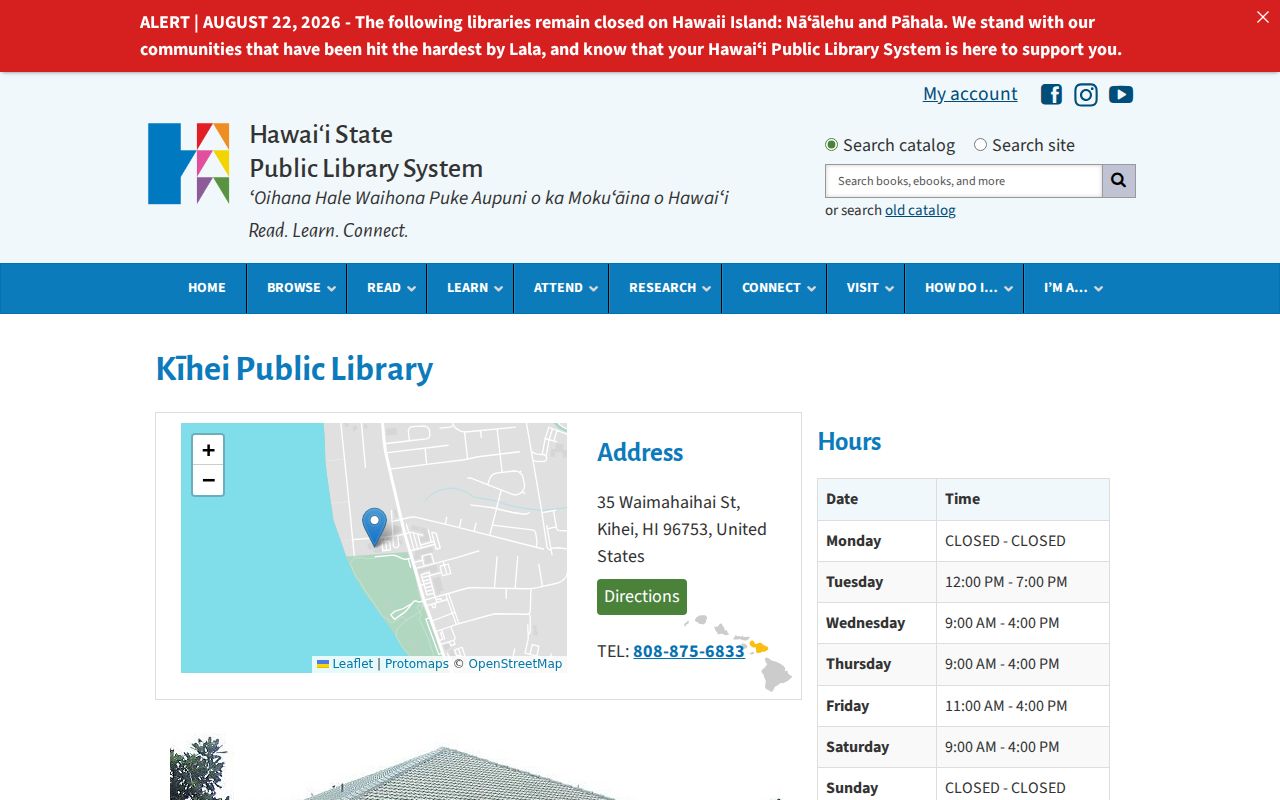
The branch page does not claim a dedicated Kihei directory shelf. Ask whether it holds the exact Polk island microfiche, telephone volumes, reverse sections, obituary resources, or local-history files needed. Give staff the name, variants, date range, likely Maui district, and record type.
The statewide HSPLS genealogy resource page shows the database and reference routes available through the library system.
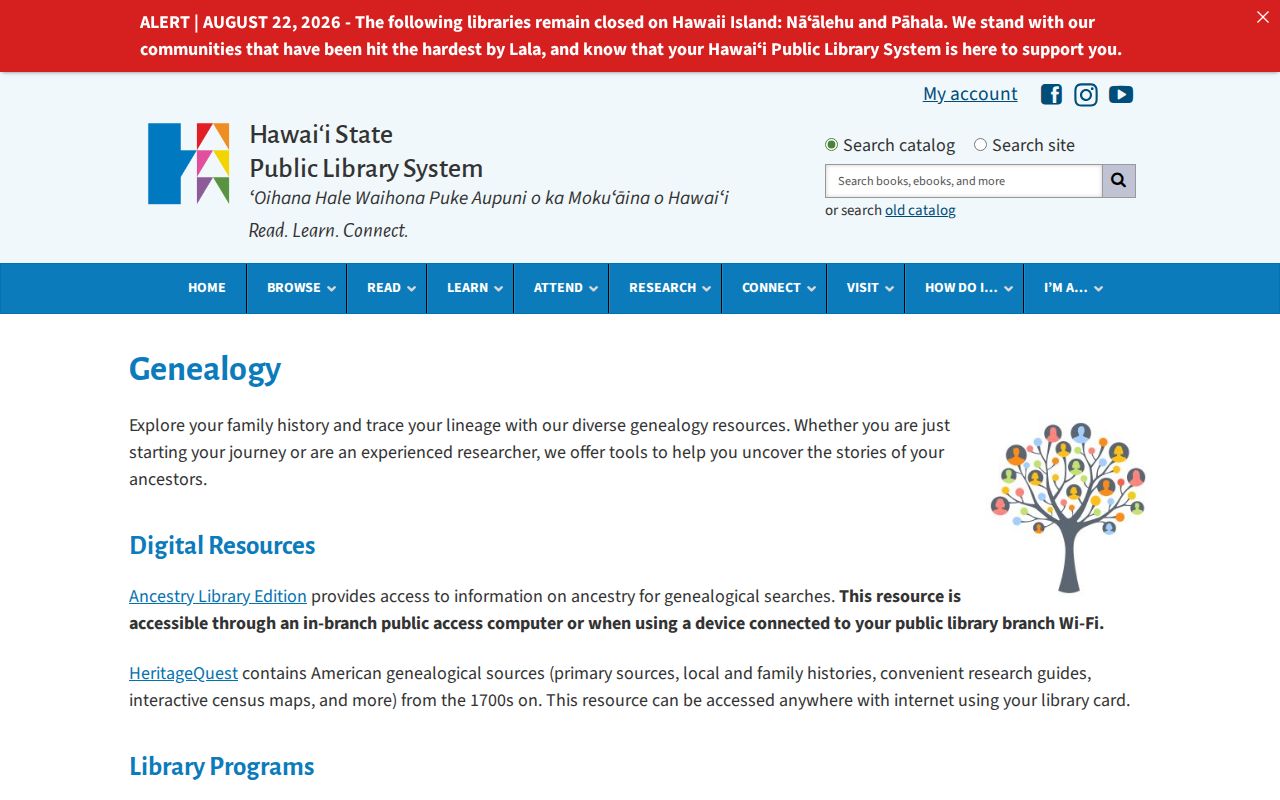
Those tools support family research, but a subscription database is not a public resident list.
Search Kihei Archive Variants
The Hawaii State Archives Digital Archives supports keyword and advanced searching, wildcards, Boolean choices, exact dates, and date ranges. Try the surname with Kihei, Kīhei, Maui, South Maui, and a source-supported district. Preserve the spelling shown in the record. OCR can omit the macron or misread a short directory line.
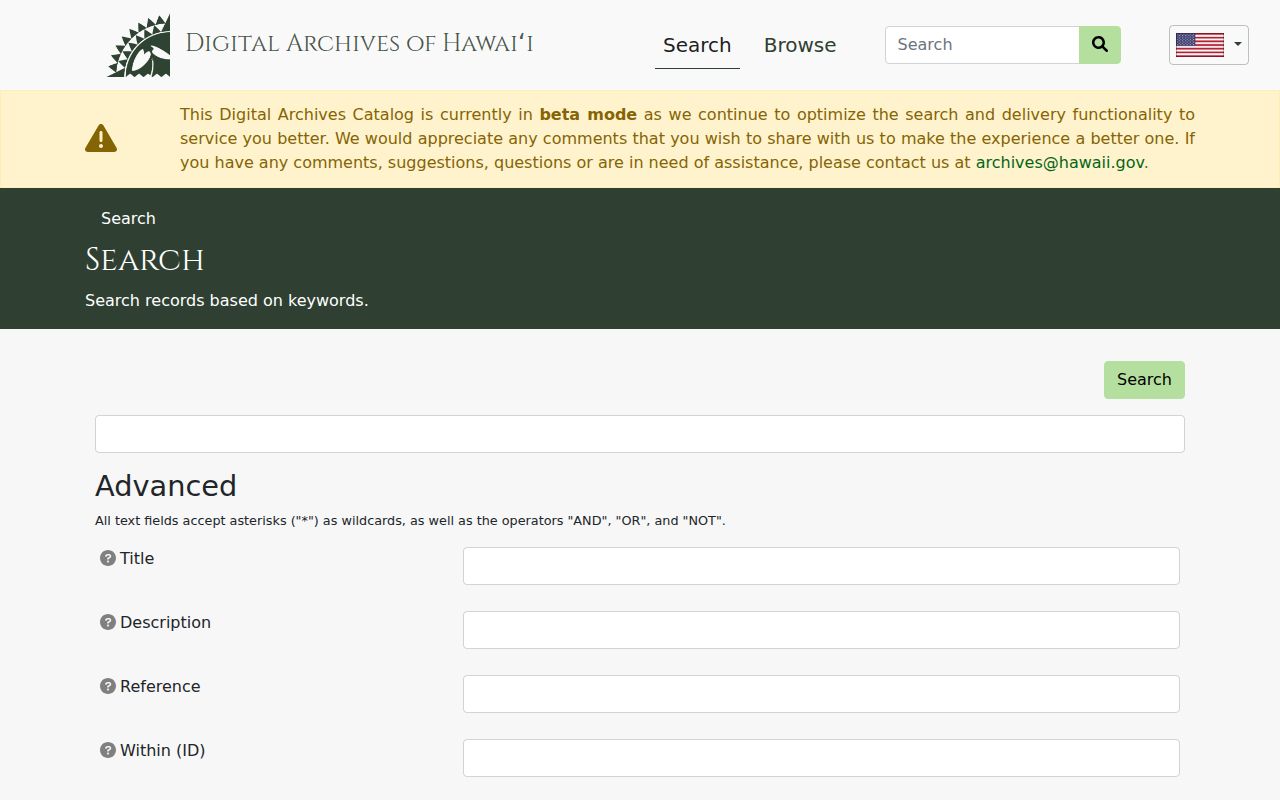
A hit may describe an index rather than display the record. The Archives research room at 364 South King Street, Honolulu, provides in-person and archivist help, generally Monday through Friday, 9 a.m. to 4 p.m., at 808-586-0329. In 2026, DAGS reported that 64 index volumes spanning the early 1800s through the late 1990s had been digitized. Some source documents still require an archivist.
Maui Collections Beyond Directories
The Maui Historical Society finding aids open routes that standard city directories miss. Named collections include Wailuku Sugar Company land records, ledgers, labor contracts and letters, church files, family histories, photographs, maps, plats, group papers, and the County of Maui Jail Record Book. These are collection leads, not an online person index.
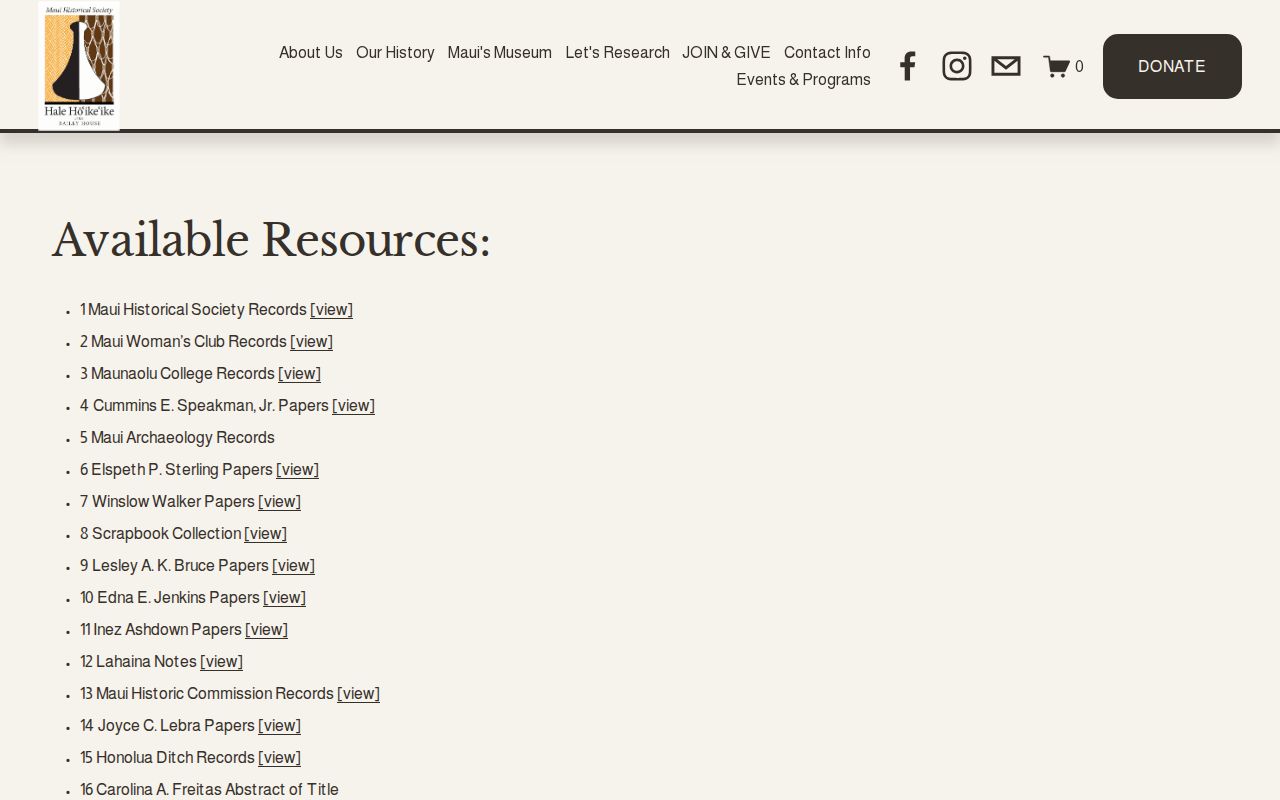
Research at Hale Hōʻikeʻike is by appointment in Wailuku. The recorded contacts are 808-244-3326 and info@mauihistoricalsociety.org; confirm current fees before a request. Supply a surname, old place name, approximate year, church, firm, plat, or family link. Staff can then test a relevant finding aid.
Kihei Directory Record Timeline
Kihei records were created by several systems, so no one date marks the start of a complete city directory. Each era points to a different kind of evidence.
| Era | Best directory or companion source | Main route |
|---|---|---|
| Before 1905 | Land, genealogy, notices, early vital and census material | Archives and historical societies |
| 1905-1929 | Polk/Husted volumes, vital indexes, probate and census | Archives scans and research room |
| 1930s-1980s | Island and telephone directories, papers, county books | UH, HSPLS, LOC, RPA, BOC |
| 1987 onward | Parcel history, instruments, court and permit systems | County and state custodians |
Planning history affects address searches too. County sources describe sparse rural uses in the 1950s, urban designation in 1967, zoning mapping in 1969, and a civic plan in 1970. A modern street number may have no direct old match. Search the period's locality, district, parcel, farm, or route when a source supports the link.
Trace Kihei Families Across Years
A sound family trail records what each item says. City directories fill gaps between census years, but they should be paired with government and archive records. A missing entry can mean a move, a name change, no telephone subscription, an unlisted number, incomplete coverage, or a publication gap.
- Normalize the surname, including married names, initials, and Hawaiian diacritics.
- Search at least two directory editions and record the year, page, entry type, and locality.
- Pair the clue with a territorial or federal census year, checking the district.
- Test the relationship with probate, obituary, vital index, land, church, or family records.
- Ask for the unscanned volume when the catalog shows only a title or finding aid.
Hawaii State Archives vital indexes cover 1832-1910 and 1911-1929, with Maui material described for 1842-1929. The Archives warns about under-reporting, and pre-1896 marriage records lack parents. Territorial census runs are incomplete. A negative search is not proof of absence. State the finding as a dated association, with its limits. For one property's backward trail, continue with the Kihei past residents search.